
Being hit by an uninsured driver in Ontario feels like the end of the matter, and it usually is not. There is normally a route to compensation, and the money can come from up to three places, reached in sequence rather than added together: the uninsured automobile coverage inside your own policy, then family protection coverage if you bought it, then a provincial fund that pays last because the law puts it last.
Your accident benefits do not depend on whether the other driver was insured. They come from an insurer on your side of the ledger, which is why one of the first useful conversations is with a lawyer who can explain what a car accident claim involves before anybody asks you to sign anything.
Two things decide how this goes. The first is how much each of those layers can actually pay, which is capped in ways most people do not expect. The second is what you report, and how soon, because the uninsured part of your own policy comes with reporting conditions of its own.
Your Accident Benefits Do Not Depend on the Other Driver’s Insurance
Ontario’s system runs two separate streams of money. Accident benefits are the no-fault one, and every Ontario auto policy has to provide them. Who caused the crash does not decide whether they are available, and neither does whether the driver who hit you bought insurance. That is worth knowing on day one, because the assumption that an uninsured driver means no money at all is what keeps injured people out of treatment they are entitled to.
Which insurer pays them depends on the policies you are connected to. Your accident benefits come from your own insurer first. If you have no policy of your own, the claim moves outward, to the insurer of the car you were in, then to an insurer of another vehicle involved in the crash, and finally to the provincial fund.
Where the sequence ends at the fund, benefits are claimed from the fund on its own paperwork. The forms you will see include the accident benefits application (OCF-1) and a separate application for death and funeral benefits. What accident benefits now include is set by the rules that took effect on July 1, 2026, so it is worth reading what changed for accident victims in 2026 before you fill anything out.
Where the Money Comes From, and Why the Fund Comes Last
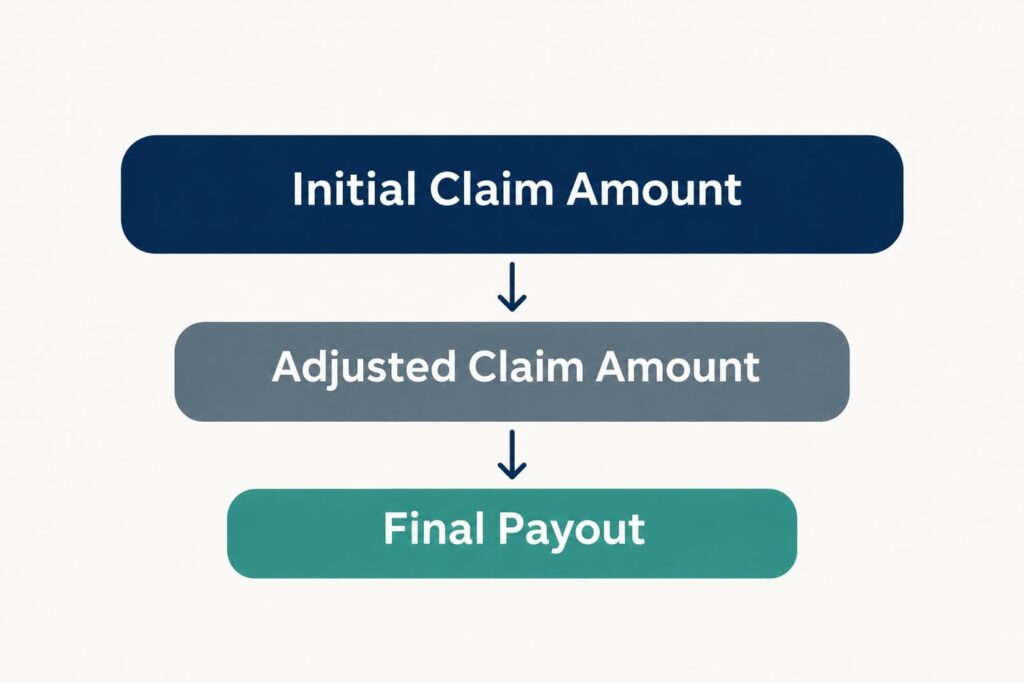
The three payers are layers, not a menu. Each one is reduced by what is available from the one before it, whether or not you claimed it, so the question is never how much all three add up to. The question is where the shortfall stops.
Two of the three sit inside an auto policy. Every Ontario auto policy has to include uninsured automobile coverage, and family protection coverage is an optional endorsement you can add to your own policy. The third is the Motor Vehicle Accident Claims Fund, which the province runs.
Your own uninsured automobile coverage and the fund are each capped at $200,000 for any one accident, however many people were hurt. They are two separate limits set for different reasons, so reaching one means you have not reached the other.
| Where the money comes from | When it answers | What limits it | What to check |
| Uninsured automobile coverage, inside your own auto policy. Every Ontario policy includes it. | When the driver who hurt you has no liability insurance, has insurance that cannot be collected, or was never identified. | The ceiling is Ontario’s minimum third-party liability requirement, $200,000 for any one accident in Ontario, and it does not rise with the number of people hurt. | Nothing to buy. Give your own insurer written notice of the claim and your proof within the periods the policy sets. |
| Family protection coverage, the endorsement known as OPCF 44R, if it was added to your policy. | When what is available from the driver who hurt you falls short of your own family protection limit. A driver with no insurance at all is the extreme version of that. | The limit shown on your own Certificate of Automobile Insurance, reduced by what is available from the other driver and from other sources. There is no standard amount. | Your Certificate of Automobile Insurance, to see whether the endorsement is listed and at what limit. |
| The Motor Vehicle Accident Claims Fund, run by the province. | Only where no policy of insurance answers at all. It cannot pay anything an insurer owes. | Up to $200,000 for one accident, with pre-judgment interest counted inside that amount and legal costs on top, and nothing for damage to vehicles. | That you lived in Ontario when it happened, and that everyone who might be responsible has been sued before a judgment goes to the fund. |
The Fund Cannot Pay What an Insurer Owes
The fund is barred by law from paying anything an insurer owes. Nobody can go to the fund instead of making a claim that an insurer would have to pay, and the fund will not pay to spare you the trouble of dealing with that insurer. That one rule is why the fund is the last payer and not the first place to look.
In practice it means you cannot choose. If your own uninsured automobile coverage answers your claim, that is the coverage that answers it, and the fund becomes a question only once there is no policy left to turn to. It also means the work of finding out which policies could respond happens early, because until that is done nobody can say the fund is the answer.
Uninsured Automobile Coverage: The Layer Every Ontario Policy Already Includes
You already own this coverage, and you did not have to buy it. A policy without it would not be a compliant Ontario auto policy, which means the question is never whether you have it. The question is what it covers and how much of it there is, and the rules that set out this coverage answer both.
What Counts as an Uninsured Automobile
An uninsured automobile is one where neither the owner nor the driver has liability insurance covering injury or damage from owning, using or driving it, or where the insurance cannot be collected. That second limb matters as much as the first, because it reaches the case where the other driver did have a policy and the insurer will not honour it. That feels like a different problem. It is treated as the same one.
Because the test looks at both the owner and the driver, a car that was itself insured is not an uninsured automobile just because the person driving it had no insurance of their own. An unidentified automobile is a separate category: one whose owner or driver cannot be worked out.
You Do Not Have to Be the Person Who Bought the Policy
The people this coverage insures are not only the policyholder. They include anyone riding in the car, and they include the policyholder, their spouse, and dependent relatives of either of them. So if you were riding in the car, or you are the policyholder’s spouse or a dependent relative, their coverage may answer for you even if you have no policy of your own.
One exclusion bites hardest in exactly this situation. A claimant who knew, or should reasonably have known, that the car they were driving had no insurance is left out of this coverage. That turns on what the person knew rather than on the car’s status alone.
How Much This Coverage Can Pay
Every vehicle on the road in Ontario has to carry at least $200,000 of third-party liability coverage, and in an Ontario crash that is the ceiling your uninsured automobile coverage is measured against, no matter how many people were hurt. Family protection coverage is the separate layer you choose, and what it can add is the limit shown on your Certificate of Automobile Insurance.
Read that ceiling against a serious injury and the shape of the problem becomes clear. A catastrophic injury, or several people hurt in one crash, can be worth far more than the ceiling allows, and the ceiling does not stretch to accommodate either. That is the reason the next two layers matter.
Your car is a separate question from your injury claim, and some of that same coverage can go to vehicle damage where the driver who hit you was identified, though your own collision and comprehensive coverages are the usual answer.
When Uninsured Coverage Does Not Respond
These exclusions are not fine print. They are what makes this coverage a substitute payer rather than a benefit you can draw on at will.
This coverage does not pay where you can make a valid claim under somebody’s liability insurance instead. If a liability policy answers your claim, that policy is where the claim goes, and the fact that you never made the claim does not move it. It also does not pay for a loss that happens while your own car is being driven by a person your policy specifically excludes. Those are two of the exclusions on the list and not the whole of it, which is one more reason to have the policy read by someone who knows what to look for.
What Your Own Policy Requires You to Report, and How Soon

Four things belong on your list in the first weeks, and all four come from your own policy rather than from anyone’s advice. Tell your own insurer in writing that you are making a claim. Keep the proof of what happened and of what it has cost you. Tell your insurer about any other insurance you might be able to turn to. And keep the car you were in available if the insurer wants to look at it.
These are conditions of the coverage itself, which is what makes them different from the Ontario car accident claim deadlines that govern when a lawsuit has to be started. Both sets run at the same time.
Written Notice and Proof to Your Own Insurer
Tell your own insurer in writing that you are making a claim within 30 days of the crash, or as soon as you can after that. Then give the insurer proof of the crash, of what you lost and of what you are claiming, as fully as is reasonably possible, within 90 days of the crash or as soon as you can after that.
The qualifier on each of those periods is real, and it is not a licence to wait. An insurer deciding whether you could reasonably have acted sooner will look at what you actually did in the weeks after the crash, so somebody who is late for a reason sits in a different position from somebody who is late because nobody chased them.
These periods are conditions of your own policy, so the exact dates are in the policy documents you already have, and your insurer or broker can confirm them for your policy.
What Your Insurer Can Ask You For
Two duties catch people out. You have to give the insurer the details of any other insurance policy you might be able to turn to, apart from life insurance. And the car you were riding in has to be available for the insurer to inspect if the insurer asks.
The first of those pairs with the rule that each layer is reduced by what is available from the one before it. Put the two together and the reason is plain. The search for another answering policy belongs at the start of a claim rather than at the end, because the deduction comes off whether or not anyone went looking.
How a Claim Against Your Own Insurer Actually Works

Here is the part that surprises people. Making an uninsured claim means making a claim against your own insurer, not against the driver who hit you. The company you have paid premiums to for years is the company that now decides what your injury is worth, and that feels very different from a claim against a stranger’s insurer.
Your Insurer Is the Other Side in This Claim
Whether the insurer owes anything, and how much, is settled one of three ways: by agreement with the insurer, by arbitration, or by a court action against the insurer. Which route a claim takes depends on how far apart the two sides are on what the claim is worth.
You are negotiating with a party that has its own interest in the outcome. That is not a criticism of insurers. It is a description of the arrangement, and it is why the proof you gathered in the first weeks carries so much weight. The evidence you hand over is the evidence the other side works from.
Claiming on your own uninsured automobile coverage is not the same as being at fault for the crash. Your insurer works out your share of fault from fixed provincial rules about how the collision happened, and how your premium is set after that is a question for the broker or insurer who placed your policy.
Turning a Judgment Against the Driver Into Money
If you sue the driver or the owner, a copy of the court papers has to go to your insurer’s Ontario head office by registered mail as soon as the lawsuit is started. That is a condition, not a courtesy, and it is easy to miss in the rush of getting a claim issued.
Then comes the part that makes the lawsuit worth bringing. If you win and cannot collect the award, or cannot collect all of it, your insurer pays the award, or the part you could not collect, when you ask for it. Your insurer can require you to sign the award over to it before it pays, so that it, rather than you, holds the right to chase the driver. The $200,000 ceiling on your own coverage still applies to what the insurer pays.
Family Protection Coverage (OPCF 44R): The Layer You Have Only If You Bought It

Family protection coverage is an optional endorsement you can add to your own policy. In a serious injury it is one of the most consequential lines on a Certificate of Automobile Insurance, because it is the difference between stopping at the statutory ceiling and recovering what the claim is actually worth. It is commonly offered, and whether it is on your policy is a question you can answer today.
What the Endorsement Does
If the driver who hurt you cannot cover what your claim is worth, family protection coverage pays the difference, up to the limit on your own Certificate of Automobile Insurance.
The drivers who count for that purpose include one who carries less liability insurance than your own family protection limit, and they include a driver or owner with no insurance at all, as well as a driver or owner who was never identified. A driver with no insurance is the extreme case of a driver who cannot cover the claim, which is why this layer belongs in the conversation as soon as you learn there was no policy on the other side.
Your Certificate of Automobile Insurance Shows Whether You Bought It
The limit is the amount set out on the Certificate of Automobile Insurance for this change form. Where no amount is set out there, the liability limit shown on the Certificate for that vehicle is the limit instead. There is no standard figure, because the amount is a choice the policyholder made when the policy was placed.
Two people can hold the same endorsement with very different limits on it, so the amount is personal to the policy rather than to the coverage. The only document that settles it is your own Certificate. Pull it out, find the endorsements or change forms listed on it, and look for the amount beside this one. A figure from anywhere else is not your limit.
What Gets Deducted From It
This layer sits above other money rather than beside it, and that is what decides how much of it you actually see. What the other driver’s own insurers can pay comes off first, along with anything available from security posted for that driver and anything available from the insurers of anyone else legally responsible along with them.
It also sits above money available to you from other sources, including disability benefits, income loss benefits and medical or rehabilitation benefits available under another policy or under a law. Money payable on a death is treated differently. The test throughout is what is available to you, not what you collected, so a claimant who never claims against an available policy has the deduction applied anyway.
Where to Look If You Are Not Sure You Have It
Four places will answer it. The Certificate of Automobile Insurance for the vehicle. The endorsements or change forms listed on that Certificate. The policy declarations page. And the broker or agent who placed the policy, who can read the file faster than you can.
Do it now rather than later. The limit decides whether the shortfall above the statutory ceiling has anywhere to go, and that answer shapes the decisions that follow, including who gets named in a lawsuit and when.
The Motor Vehicle Accident Claims Fund: The Payer of Last Resort

The Motor Vehicle Accident Claims Fund answers claims from crashes involving uninsured or unidentified drivers where there is no available policy of insurance. The province’s Motor Vehicle Accident Claims Fund page sets out who it covers, what it pays and how to apply, and it is worth reading before you deal with anyone about a fund claim.
Who Can Reach the Fund
The conditions are specific. You lived in Ontario when it happened. You were in a motor vehicle accident in Ontario where nobody involved had auto insurance. And you were injured, or you have property damage worth more than $100.
The examples the province gives are the ones people recognize themselves in: pedestrians and cyclists struck by uninsured vehicles, passengers in uninsured vehicles, and people hit by a vehicle that was never identified. Ontario runs a fund specifically for crashes where nobody was insured, which tells you the province planned for this happening.
Residency is part of the test, not a formality. So is the condition that nobody involved had insurance: where another vehicle’s insurer answers, the claim is against that insurer and not against the fund.
How a Claim Reaches the Fund
There are two ways a claim gets to the fund. One is to apply to it directly, where you would have been able to sue the owner or driver of the uninsured vehicle. The other is after an Ontario court has given you a judgment you cannot collect. Which one applies depends on how far your claim has already gone, so the door is usually decided by the stage you are at rather than by preference.
Then there is the question everyone asks, which is how you serve someone with no insurer behind them. Notice of an application goes out by registered mail to the owner and the driver of the uninsured vehicle. If they do not answer within 30 days, they are treated as not disputing liability. The process does not stall because the other side ignores it.
What the Fund Can Pay
For injury and death, the fund pays up to $200,000 for one accident, with pre-judgment interest counted inside that amount and legal costs sitting outside it. For property damage it may pay up to $10,000 per accident including interest, there is a $100 deductible on payouts, and it does not pay for damage to vehicles.
That last condition is the one that surprises people most, and it bites hardest where the car was written off. Those are ceilings for one accident rather than for each person hurt, so a crash that injured several people does not multiply them. All of these amounts share one further condition: they are reached only where no insurance answers, so for most people the ceiling that matters is the $200,000 on their own coverage.
Why the Set of Defendants Is Decided at the Start
If your claim reaches the fund on a judgment, the fund will not pay unless you sued everyone you might reasonably be considered to have a claim against, and took each of those claims through to a judgment or a dismissal.
In practice that decision gets made at the very start of a claim, long before anyone is thinking about the fund, and a name left off then is not added later. The people who might belong on that list are not always obvious: an owner who was not driving, an employer, another motorist whose share of the blame is arguable. This is the part of an uninsured claim that is worth taking advice on early, because it is the part a later claim cannot repair.
The Documents the Fund Asks For, on a Set Schedule
The fund asks for one group of documents within 180 days of the crash and a second group within 210 days, and missing one of those periods does not take away your obligation to supply the document or end your claim.
The first group includes the details of any insurance policy that might have provided coverage, the names and addresses of the people a claim might lie against, where you lived on the date of the crash, the police report, and proof of your income for the year before the crash. The second includes benefit applications, medical reports and clinical notes.
Look at what that list is asking for. Several of the first group’s items are about other people’s insurance and other people’s responsibility, which tells you how the fund approaches a file: before it pays anything, it wants to know who else could have. Gathering that material early is not administrative tidiness. It is the same work that decides whether the fund is ever reached.
What Decides How Much You Recover
There is no number that answers this honestly, because the amount depends on the claim rather than on the category it falls into. What can be set out is the list of things that move it, and in an uninsured claim that list is shorter and harder-edged than usual.
What Shapes the Size of an Uninsured Claim
These routes pay what the claim is worth, so the same rules that shape any Ontario injury claim shape this one, and how Ontario car accident settlements work is the same analysis here as anywhere else.
Four things then decide the size of the claim. How serious the injury is, measured against the statutory ceiling rather than in the abstract. Whether family protection coverage was bought, and at what limit. How many people were hurt in the one crash, because the ceiling does not grow to fit them. And what is available from any other answering policy, which comes off the top.
Why the First Few Weeks Matter More Here Than in an Ordinary Claim
In an ordinary claim, the at-fault driver’s insurer is identified for you within days. It investigates, it takes statements, it preserves what it needs, and it holds the file open while you get treatment.
Here nobody is doing that work. There is no opposing insurer to identify the claim to. The insurer you are reporting to is the one that will later decide what it owes you. And the vehicle, the police report and the other driver’s details can stop being available within days rather than months. That is the difference between this claim and an ordinary one, and it is the whole of it.
What Happens to the Driver Who Had No Insurance
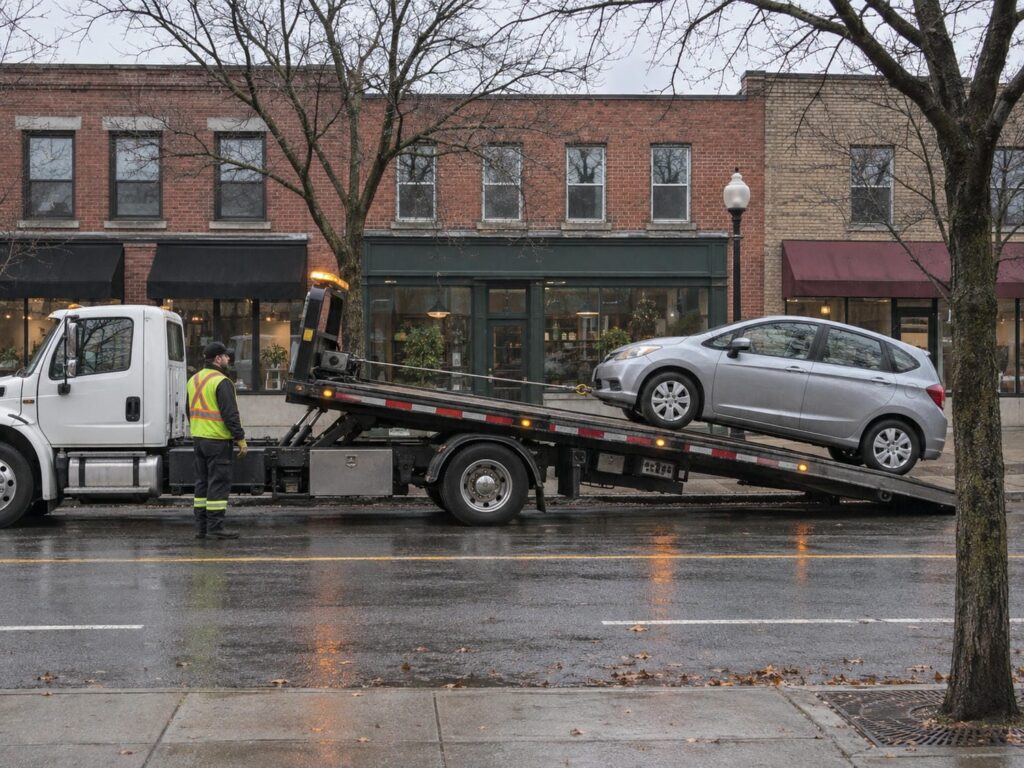
An owner or lessee of a motor vehicle must not drive it on a highway, or let someone else drive it, unless it is insured. Insurance is also a gate on plating a vehicle, because a permit cannot be issued, renewed or transferred unless the ministry is satisfied the vehicle is insured. So the rules that make insurance mandatory bite in two places at once, and the driver who hit you had none anyway.
The Penalties the Province Can Impose
A conviction carries a fine of not less than $5,000 and not more than $25,000 on a first conviction, and not less than $10,000 and not more than $50,000 on a later one. In addition, the driver’s licence may be suspended for up to 1 year. The vehicle is seized and impounded for up to 3 months.
Each of those carries a range or a ceiling, and the gap between the top and the bottom is wide. The suspension is discretionary, so it may follow a conviction and it may not, and the impoundment period is an outer limit rather than a fixed term. None of it is money that comes to you, and none of it is a lever anyone acting for you controls.
The Fund Recovers What It Paid
Where the fund pays, the province takes over the injured person’s rights against the uninsured driver and can sue on them. The driver’s licence is suspended, and it stays suspended until the amount is repaid in full or a repayment schedule is in place. The fund’s enforcement reaches further than that, to property seizure, withholding wages and examinations on the judgment.
That is the province collecting its own money. The recovery is the province’s, not yours. It does not add to what you receive, and it is not pressure anyone acting for you applies on your behalf. A driver who had no insurance often has little to collect from, and nothing in the province’s recovery powers changes that, which is why the layers inside your own policy matter more to you than anything that happens to the other driver.
If the Car That Hit You Was Never Identified
An unidentified automobile is one whose owner or driver cannot be worked out, and your own uninsured automobile coverage responds to injuries caused by one. That is the good news in a hit and run, and it is often the only route the claim has.
The condition people get wrong concerns the car rather than the injury. Damage to your own vehicle caused by an unidentified automobile is not covered by this part of your policy. That is what optional loss or damage coverage, the collision and comprehensive coverages, is for.
Two extra conditions come with this case, and both carry their own qualifier. The crash has to be reported to a police officer or other officer within 24 hours of it happening, or as soon as you can after that. And a written statement setting out the details of the crash goes to your insurer within 30 days, or as soon as you can after that.
The province’s fund also lists people hit by a vehicle that was never identified among those it can answer for, which matters most where there is no policy of your own to turn to.
If Your Own Vehicle Was Not Insured
Some people arrive at this question from the other side, because their own vehicle was not insured when the crash happened. The position is worse, and it is not nothing. Two separate rules are at work, and they are commonly run together when they actually do different things.
The Bar on Suing, and What It Does Not Reach
If you were driving a vehicle you own or lease while it was uninsured, or you let someone else drive it, you cannot sue in Ontario for your injuries, even if the crash was entirely someone else’s fault. That bar stops the lawsuit only. It does not touch your accident benefits.
The second rule is separate and narrower. Your own uninsured automobile coverage leaves out a claimant who knew, or should reasonably have known, that they were driving without insurance, which turns on what the person knew rather than on the car’s status alone. Somebody who had every reason to believe the car was insured is in a different position from somebody who knew. The claim deadlines when your own vehicle was uninsured are the next thing to get clear on.
The Benefits That Are Still Available
The accident benefits exclusion for an uninsured vehicle is narrower than people assume, in three ways that all matter.
It reaches the driver of the vehicle, so a passenger is not caught by it and neither is a pedestrian. It turns on whether that driver knew, or should reasonably have known, that the vehicle was not insured, which makes it a question about knowledge rather than about the car alone. And it does not reach medical, rehabilitation or attendant care benefits, so the treatment side of a benefits claim survives it. The exclusion takes away some benefits. It does not take away the care.
Get Advice Before the Decisions Are Hard to Undo
Three things get settled in the first weeks of an uninsured claim: which policies could answer, what gets reported and proved to your own insurer, and who is named as a defendant. The first two can usually be repaired if they go wrong. The third often cannot.
At HSK Law we take these claims on a contingency basis, so there is no fee unless the claim succeeds, and the first conversation is a free, no-obligation consultation. You deal with a lawyer directly rather than with a file number, which matters in a claim where the evidence is yours to assemble and the clock belongs to your own policy. Our team brings 30+ years of collective personal injury experience and has helped 1,000+ clients through injury claims.
If you want the wider picture first, our work as a car accident lawyer covers how the pieces of a claim fit together. When you are ready, book a free consultation and we will go through what your own policy holds and what has to happen next.
Frequently Asked Questions
Usually yes, and the useful question is where it comes from. Your own policy’s uninsured automobile coverage is the first place to look, because every Ontario auto policy includes it. Family protection coverage can come next if you added that endorsement to your policy. The Motor Vehicle Accident Claims Fund comes last, because the law puts it last and bars it from paying anything an insurer owes. Which of those answers your claim depends on what the driver who hit you had and on what you bought.
You already have it. Every Ontario auto policy has to include uninsured automobile coverage, so there is nothing to add, nothing to elect and nothing to upgrade. A policy without it would not be a compliant Ontario auto policy.
Your uninsured automobile coverage can respond. An uninsured automobile includes the case where insurance exists but cannot be collected, so a policy that will not answer is treated much the same as no policy at all. Report it to your own insurer the same way you would report a crash with a driver who carried nothing: in writing, within 30 days of the crash or as soon as you can after that, with your proof to follow inside 90 days or as soon as you can after that.
Look at your Certificate of Automobile Insurance and the endorsements listed on it, and ask the broker or agent who placed the policy. The limit is the amount on the Certificate, and there is no standard amount, because it is a choice the policyholder made. If you cannot find it, ask rather than assume, because this is not a question to settle after a crash.
No. The fund may pay up to $10,000 per accident for property damage including interest, there is a $100 deductible on payouts, and it does not pay for damage to vehicles. So the property side of a fund claim can reach other kinds of damaged property, and your car is not one of them. Damage to your own car is what the collision and comprehensive coverages on your policy are for.
It depends which door your claim comes through. Where the claim reaches the fund on a judgment, the fund will not pay unless you sued everyone you might reasonably be considered to have a claim against and took each of those claims to a judgment or a dismissal. There is also a route that applies directly, where you would have been able to sue the owner or driver of the uninsured vehicle. Either way, who belongs on the list of defendants is a decision worth advice at the start.
No. A fine is a penalty the province collects, not compensation, and the licence consequence works the same way: the driver’s licence may be suspended for up to 1 year, and where the fund has paid, it stays suspended until the money is repaid or a repayment schedule is in place. None of that comes to you. Your money comes from your own uninsured automobile coverage, from family protection coverage if you bought it, and from the fund where no policy answers at all.
Book a FREE consultation
Submit the form below or call (416) 238-7105 to find out if you have a claim!
"*" indicates required fields