
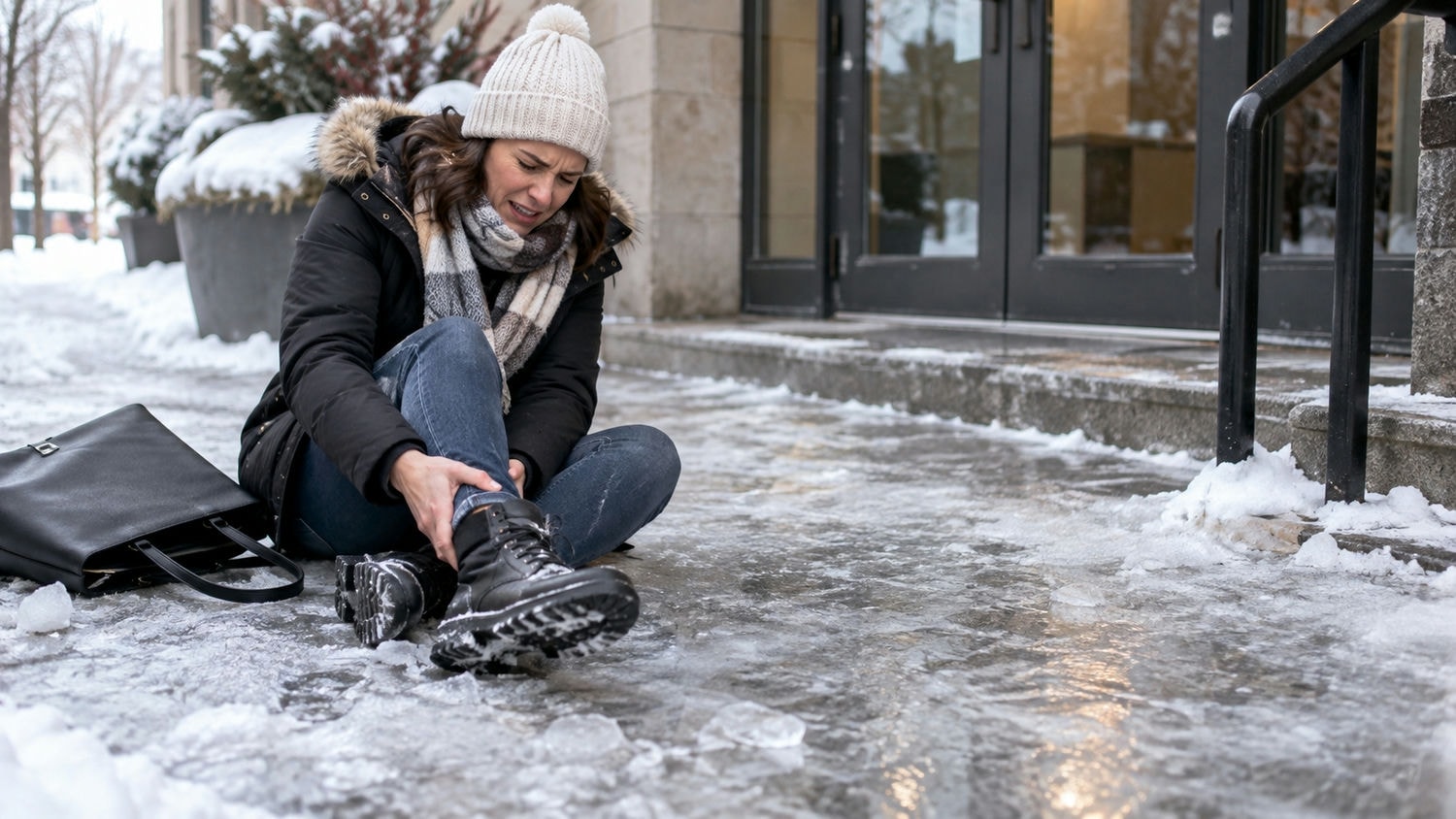
If you have ever slipped on a icy sidewalk outside a store, tripped on a broken step in an apartment building, or slipped on some water at a mall that that didn’t have a “caution” sign, then you have run into a legal area called Occupiers’ Liability. It sounds technical, but the idea behind it is simple: whoever controls a property has a legal duty to keep the people on it reasonably safe.
What Is “Occupiers’ Liability,” Exactly?
In Ontario, the Occupiers’ Liability Act sets out the legal responsibility that property owners, tenants, landlords, and property managers have toward the people who come onto their premises. The key word is “occupier” — and it doesn’t just mean the person who owns the property.
Examples of “Occupier’s:
- Homeowners
- Restaurant or store owners
- Municipalities (for public spaces like parks and sidewalks)
- An event organizer running a festival or fair on a rented field
- Gym or fitness studio operating classes inside a leased space
- Summer camp running programs on land it doesn’t own
- Snow removal contractor responsible for clearing a parking lot
- Landlord who owns a building but leases units to tenants, while remaining responsible for structural repairs and shared spaces (hallways, stairwells, parking lots)
- Bar or nightclub controlling who it lets through the door
- Condominium board that controls building access for visitors
- Private club that decides who may enter the premises
Types of Claims:
These claims can come from all kinds of everyday situations, including:
- Slip and falls on snow, ice, or wet floors
- Trips over broken steps, uneven flooring, or torn carpeting
- Injuries from poor lighting in stairwells or parking lots
- Falling objects or unsecured shelving in stores
- Inadequate security leading to injury or assault
- Swimming pool or balcony accidents
- Injuries at a friend’s or family member’s home
- Unsafe homes, festivals, playgrounds, bars, restaurants, schools, etc.
The question isn’t just whether an accident happened — it’s whether the occupier failed to take reasonable steps to prevent it.
Do You Automatically Have a Case?
Not every fall or accident on someone else’s property leads to a successful claim. The law doesn’t expect a property to be perfectly hazard-free — it expects the occupier to take reasonable care given the circumstances. To determine whether a claim exists, the key questions are usually:
- Did the occupier know, or should they have known, about the hazard?
- Did they take reasonable steps to fix it, remove it, or warn people about it?
- Was there a reasonable amount of time to address the hazard before the accident?
- Did the injured person do something that contributed to the accident?
- Should someone have stopped or monitored the activity?
- Did they put warning signs?
For example, an icy walkway that formed minutes before you fell is treated differently than one that had been left unsalted for two days after a storm. Every case comes down to its specific facts.
The Deadlines Are Shorter Than You Might Think
This is one of the most important — and most overlooked — parts of an occupiers’ liability claim: you may have far less time to act than the usual two-year window for personal injury claims.
- Falls involving snow or ice on private property: Ontario law requires you to give the property owner (or their snow removal contractor) written notice within 60 days of the incident. Miss this window, and you can lose your right to sue entirely, even if your injury is serious.
- Falls on municipal property (like a city sidewalk or park): The notice period can be as short as 10 days, under separate municipal legislation.
- Other injuries on private property (not involving snow or ice): These generally still fall under the standard 2 year limitation period, but earlier notice is always better for preserving evidence.
The safest move is to get legal advice as soon as possible, not months later.
How HSK Law Can Assist With Occupier’s Liability Claims
The legal team at HSK Law understand that an unsafe property can cause serious injury or death. Our goal is to prove the hazard existed and secure full compensation for our clients’ injuries. We work with trusted engineers and medical experts who help build the case and speak to our clients’ recovery and how their injuries will affect their lives going forward. We prepare every case for trial, which often allows us to reach a fair settlement without needing one.
Our personal injury lawyers have handled occupiers’ liability cases involving slip and falls, icy roads, malls, and public events.
If you or a loved one needs a lawyer experienced in injuries caused by an unsafe property, contact HSK Law for a free consultation.
Book a FREE consultation
Submit the form below or call (416) 238-7105 to find out if you have a claim!
"*" indicates required fields