
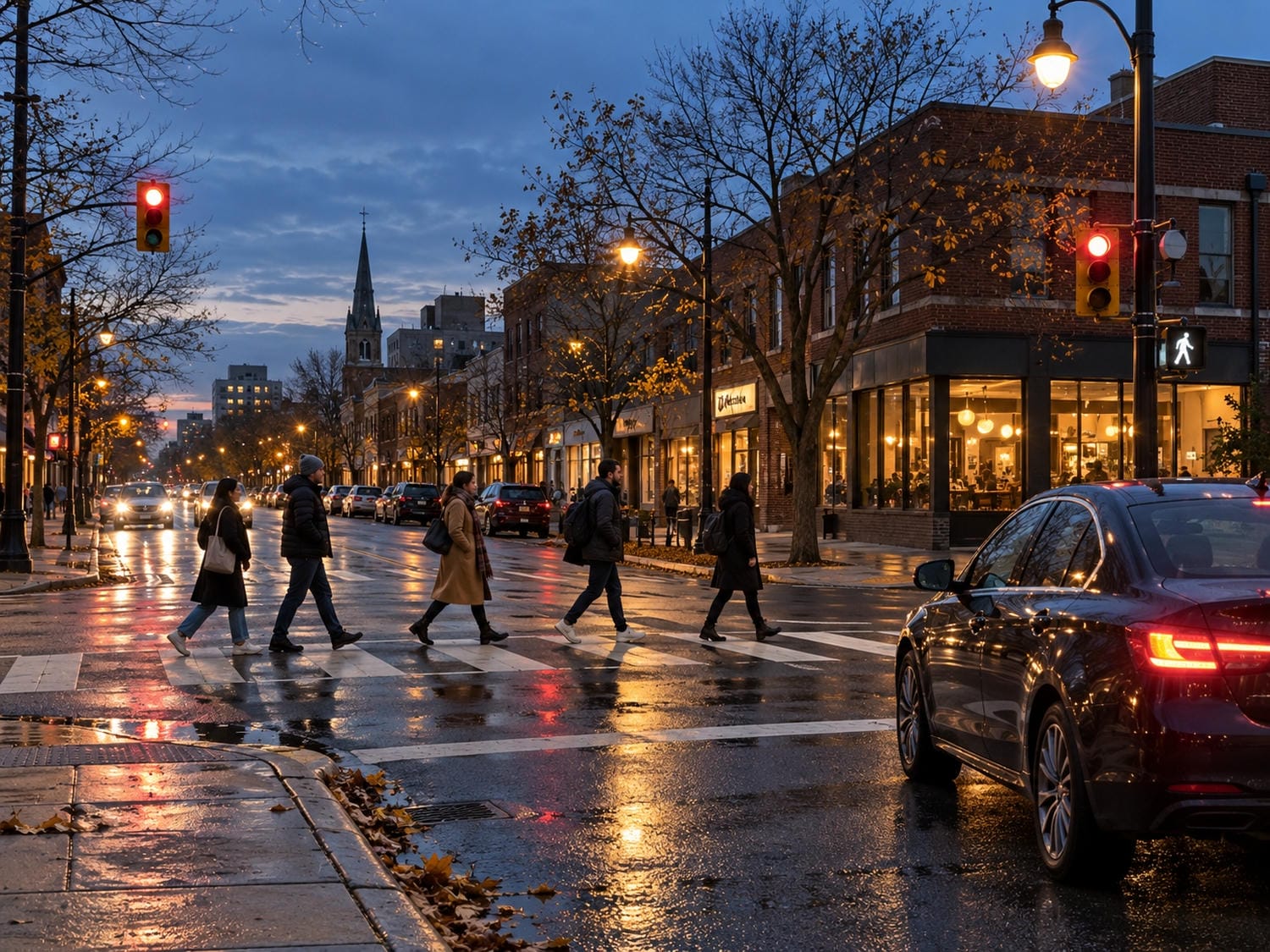
In Ontario, fault in a pedestrian collision is shared out by percentage rather than awarded to a winner. The starting point sits with the driver, because the law puts the burden on the driver’s side to show the collision did not come from their own negligence. If some share of the blame does land on you, it reduces what you can recover. It does not end your claim. That is the first thing a pedestrian accident lawyer will tell a pedestrian hit by a car in Ontario who has already heard the driver say they came out of nowhere.
In 2022, 106 pedestrians were killed by motor vehicles on Ontario roads. Three questions decide how a case like that actually plays out: what jaywalking means under Ontario’s rules, who had to wait for whom where you were crossing, and what the burden on the driver does and does not do.
Fault Is a Percentage, Not a Verdict
You came here for a finding: that the driver was to blame, or that you were. Ontario does not produce findings like that in a collision claim. It produces a split, and the split has a practical consequence. Your share comes off what you recover, not off your right to claim at all.
Who Decides Each Side’s Share
Ontario’s Negligence Act does this work. Where damages have been caused or contributed to by two or more people, the court determines the degree to which each is at fault, and where the injured person’s own fault contributed, the court apportions the damages in proportion to the fault it finds. Damages means the money the at-fault side pays for the harm itself: income lost, care needed, and the effect of the injury on the person’s life. Neither the police nor an insurer performs that exercise.
There is no standard percentage. The split turns on what each side could see, how fast the vehicle was going, where the crossing happened and what the physical evidence shows, and it can run from the driver carrying all of it to the two sides sharing it. A share of the blame reduces what you recover rather than ending your claim.
What a Police Report and a Charge Are Worth
A police report is worth something. So is the officer’s conclusion, a charge laid, and a charge not laid. All of them are evidence that can matter later. None of them is the fault decision. That cuts both ways: a driver who was not charged can still be found to carry the larger share of the fault, and a pedestrian who was ticketed can still recover.
Because someone was injured, the collision has to be reported to police, and that report becomes part of the record fault is later argued from. The damage thresholds you may have read about are for property-damage-only crashes, not for one where someone was hurt. An insurer that quotes the officer’s view back to you is quoting evidence, not a ruling.
Insurers and Courts Decide Fault by Different Rules
Two different exercises run under the same word. Ontario’s Fault Determination Rules direct an insurer to determine the degree of fault of its own insured, and they require that determination to be made without reference to the circumstances in which the incident occurred, including weather, road conditions, visibility or the actions of pedestrians. That last item matters to a person on foot: those rules leave what the pedestrian did out of the calculation entirely. A court apportioning fault is doing a different job, on different material, and an insurer’s conclusion does not bind it. So a fault figure produced inside the insurance system is not an answer to who is legally liable.
What the Law Does If the Shares Cannot Be Determined
The law has an answer for the case where the shares cannot be worked out at all. Where it is not practicable to determine the respective degrees of fault between the parties to an action, they are treated as equally at fault, and in a jury trial each side’s degree of fault is a question of fact for the jury. That condition is narrow, and it is not the same thing as a file that feels thin to the person living it. What it does tell you is why evidence carries so much weight in a collision where the injured person may not be able to say what happened.
What the Reverse Onus Actually Means
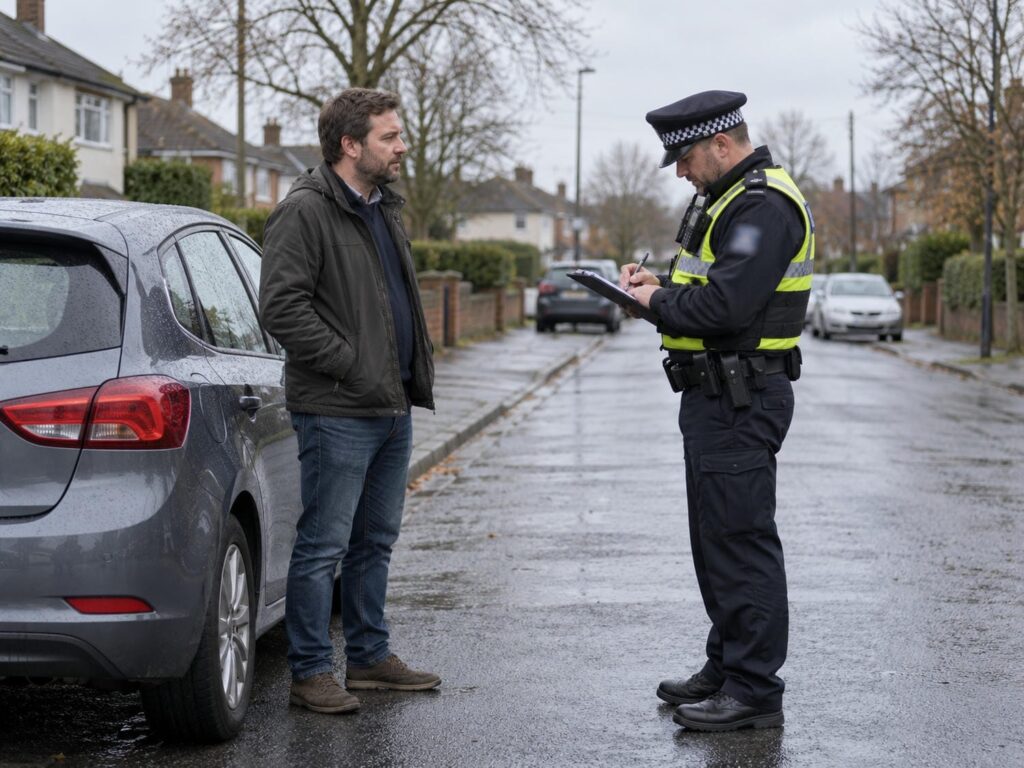
The reverse onus is the rule that makes a pedestrian claim different from an ordinary injury claim. It hands the injured person something real at the outset. It also does less than the phrase suggests, and someone who hears only the first half of it ends up disappointed later.
The Driver’s Side Has to Disprove Negligence
Under section 193 of the Highway Traffic Act, headed “Onus of disproving negligence,” the driver’s side carries the burden of showing the collision did not arise from their negligence. In an ordinary injury claim, the injured person has to prove the other side was careless. Here that is turned around at the outset, so the driver’s insurer starts out needing to explain the collision rather than waiting for you to explain it. In practice that shapes the first letters in a file: the questions run toward what the driver saw, how fast they were going and when they braked. That is a starting position rather than a verdict, and how it plays out depends on the facts of the collision.
What the Reverse Onus Does Not Do
Three things the reverse onus does not do. It does not make the driver automatically liable. It does not take your own share out of the calculation, which is still apportioned. And it does not move the decision away from the court, which is where the degrees of fault get settled. So treat it as a lever rather than a result. It changes who has to explain themselves first, which is worth a great deal in a case where the person on foot cannot describe the impact, and it decides nothing on its own.
What the Burden Means When the Injured Person Cannot Remember
A serious pedestrian injury can be a head injury, and a head injury can take away the memory of the seconds before impact. When that happens, the driver is left as the person still able to narrate a visibility and speed decision the driver made. The pedestrian cannot say how close the car was when they stepped out, whether the headlights were on, or whether the vehicle slowed at all. A rule that required the injured person to prove what they cannot recall would hand that collision to the side with the memory. The burden on the driver’s side is what keeps the claim alive long enough for the physical evidence to be gathered and tested.
Right of Way: Who Has to Wait for Whom
Where the collision happened changes which duties were in play. A marked crosswalk, an unmarked crosswalk, a signed pedestrian crossover, a school crossing with a guard, a driveway and a mid-block stretch are legally different places with different duties, and the public has one word for several of them. Those duties are set out plainly in the Ministry of Transportation’s driver’s handbook. Where you were struck shapes the argument, so have someone look at it early: the accident-benefits rule turns on being involved in an accident with an insured vehicle in Ontario, and the apportionment rule applies to any action for damages. A collision in a parking lot, a driveway or a private lane is not something to write off on your own.
Crosswalks Are Not Only the Painted Ones
A crosswalk is not only a painted one. The Ministry of Transportation’s driver’s handbook describes a crosswalk as the portion of a roadway that connects sidewalks on opposite sides of the road into a continuous path, or one that has signs, lines or other markings for pedestrian crossing. The same handbook states it plainly: “not all crosswalks are marked, but nearly all intersections have crosswalks.” Where there is no marked stop line, a driver stops at the crosswalk, marked or not.
That is worth sitting with if an adjuster has told you there was no crosswalk where you were hit. A residential corner where two sidewalks line up across the asphalt, with no paint anywhere, is a crossing the rules already recognize. Crossing at a corner with no paint on the road is not automatically crossing outside the rules.
Pedestrian Crossovers: Stop, and Stay Stopped
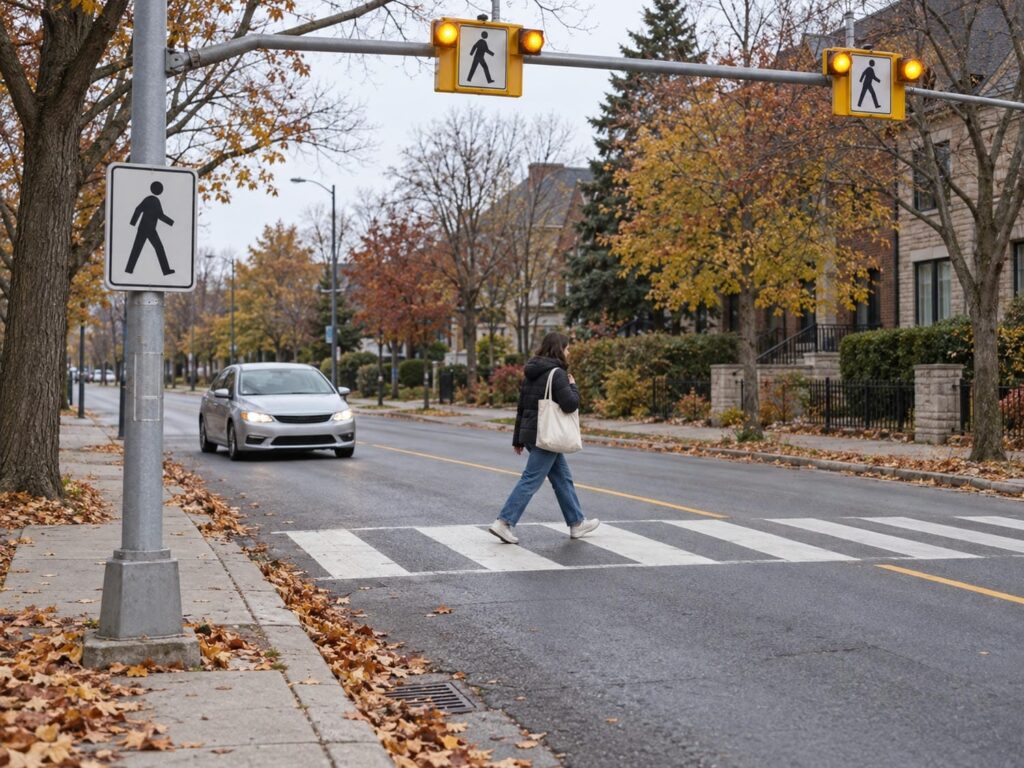
A crossover is not the same thing as a crosswalk. It is a specifically signed and marked installation, and it can carry overhead flashing lights and a push button a pedestrian uses to set them flashing. The duties there are stronger.
A driver approaching a crossover where someone is crossing must stop before entering it, and must not proceed until the pedestrian is no longer on the roadway. Drivers and cyclists must stop and yield the whole roadway. Do not pass any vehicle within 30 metres of a crossover. And never pass a vehicle that has stopped to let someone cross. Those two passing rules are easy to check against what happened: 30 metres is a distance anyone can picture, and whether the car ahead had already stopped is something a witness can say.
Turning Drivers, Driveways and the Duty to Wait
All of this is one idea: a vehicle crossing the path you are walking on has to wait for you. A driver turning left must wait for approaching traffic to pass or turn, and for pedestrians in or approaching their path to cross. A driver turning right must wait for pedestrians to cross if they are in or approaching their path. When entering a road from a private road or driveway, a driver must yield to vehicles on the road and to pedestrians on the sidewalk. The same guidance tells drivers to scan sidewalks and paths as well as the roadway.
Two things follow for you. First, “in or approaching your path” reaches the person who has stepped off the curb but is not yet in front of the car. Second, failing to yield to a pedestrian is a ticketable offence in its own right, which means the duty is not merely advisory.
School Crossings and Crossing Guards
At a school crossing the duty runs to the whole roadway, not only the half the vehicle is travelling on. Drivers and cyclists must stop and yield the whole roadway at pedestrian crossovers, at school crossings, and anywhere there is a crossing guard. Only once the pedestrians and the guard have crossed and are safely on the sidewalk may they proceed. That is a longer wait than a hurried driver expects, and it is the duty a dashcam gets measured against later. Failing to stop for a guard displaying a stop sign can mean a substantial fine and three demerit points.
Crossing Mid-Block, and What Gets Argued About You
Crossing mid-block where no crossing exists is where the argument about your own share gets made. It is still not the end of the claim. A driver’s duty to exercise due diligence in responding to the presence of pedestrians does not switch off between intersections. What the argument turns on is concrete: sightlines, street lighting, what the vehicle’s speed allowed the driver to react to, where on the vehicle the impact landed, and whether the driver was looking at the road at all.
Then there are the allegations pointed the other way, and it is better to hear them now than from an adjuster. That you were on your phone. That you had headphones in. That you had been drinking. That you were in dark clothing at night.
Each of those feeds the argument about shares, and none of them is a rule that ends anything. The output is still a proportion, and the court determines it.
Jaywalking: What Ontario’s Rules Actually Say
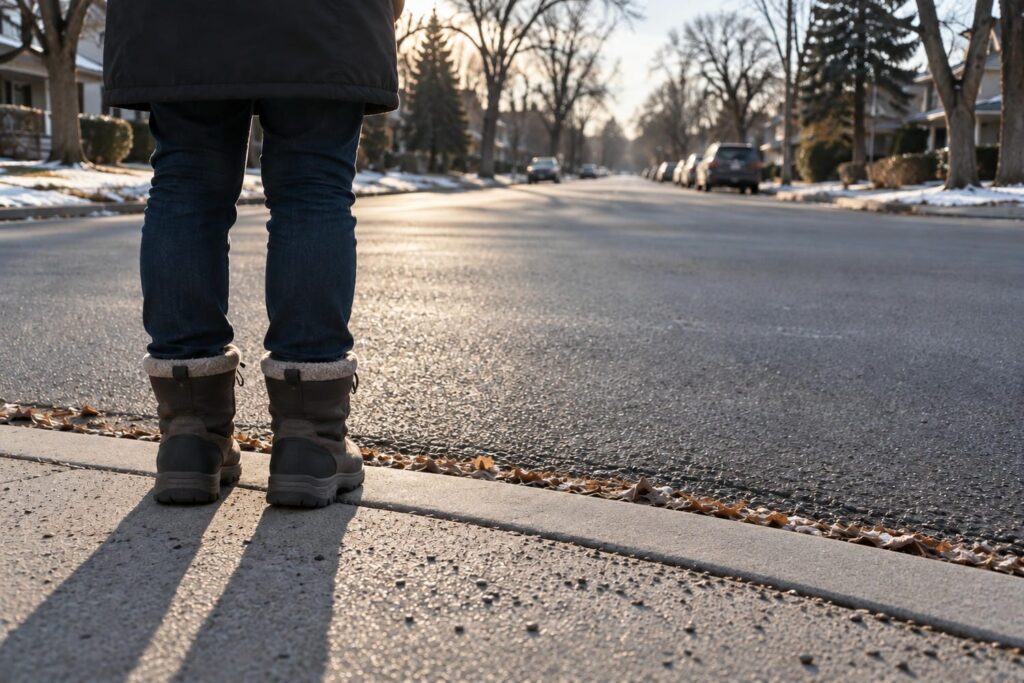
Jaywalking is an imported word. It carries an implication that crossing outside painted lines is illegal in itself and fatal to a claim, and neither is how this works here. A corner with no paint on it is still a crossing, which already answers part of the question. The rest is what actually gets ticketed, and what a ticket does to a claim.
What Ontario Tickets a Pedestrian For
Under Ontario’s Highway Traffic Act there is no offence called jaywalking, and the Ontario Court of Justice’s schedule of set fines for that Act, which lists the set fines for offences under it, does not contain one.
What does exist is a short list of specific pedestrian offences, each carrying a $35 set fine: failing to yield at a pedestrian crossover, disobeying a red, amber or flashing green signal, disobeying a “don’t walk” signal, and failing to use a crosswalk where one applies. The crossover duty behind the first of those is plain: a pedestrian must not leave the curb or another place of safety at a crossover and move into the path of a vehicle that is so close the driver cannot practicably stop. That duty belongs to crossovers, and it does not generalize to every place a person crosses.
A driver’s failure to yield to that same pedestrian is a $300 set fine, or $600 in a community safety zone. A $35 ticket set against a $300 one is a weighing of the two duties, and the weighing is not subtle.
Why Paying a $35 Ticket Can Cost You Later
The court’s own guidance for people who receive a ticket is direct: paying the total amount shown on the ticket is a guilty plea, a conviction is registered, and you do not have to go to court. Not responding within 15 days of receiving the ticket may itself result in being found guilty.
For an injured pedestrian, that is a trap dressed as convenience. The cheapest way to make a $35 ticket go away creates a conviction the driver’s insurer will put in front of you, obtained without anyone examining how the collision happened. A conviction is evidence, not the fault decision. A ticket has a response window, and it is worth getting advice inside it rather than after it.
What Proves Fault When a Pedestrian Is Hit by a Car in Ontario
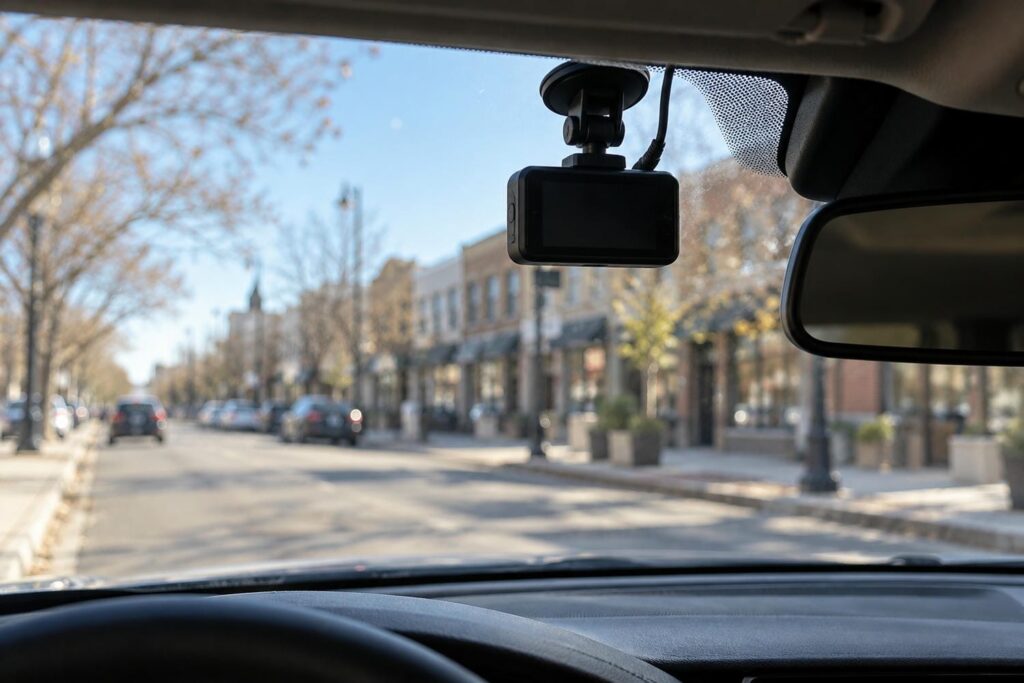
The law puts the burden on the driver’s side. Evidence is what decides whether that burden is met, and in a pedestrian collision the evidence sits outdoors, on a public road, in the hands of whoever happens to hold it. It does not keep. What gets gathered in the first weeks is what there is to argue from a year later.
The Driver’s Account Arrives First and Arrives Alone
Three sentences get said to every adjuster. He came out of nowhere. She stepped right in front of me. It was dark and he was wearing black. Each one is an account of a visibility and speed decision the driver controlled, offered by the person who is still able to narrate it. Each one is also testable. A car that came upon someone out of nowhere was either travelling too fast for the sightline or was not being watched out of. That is the shape of the work: the driver’s account is where the argument starts, not where it finishes.
The Evidence That Tests the Account
What tests an account is physical, and it is specific. The sightlines and lighting at the spot, the point of impact, and the height and location of the damage on the vehicle begin to fix the geometry. Throw distance, braking and skid evidence and the vehicle’s event data recorder speak to speed. Signal timing, nearby dashcams, transit and business CCTV and the timing of the 911 call fix the sequence. Put a few of those together and a driver’s version either holds or it does not.
None of it waits. Footage is overwritten, the roadway changes, and marks on the road disappear. If someone in the family can act while the injured person cannot, the steps that protect your claim in the first few days are worth reading early, because they are what keeps the proof available to be tested.
Two Claims, Two Sets of Rules: Benefits and the Lawsuit
Being hit by a car in Ontario produces two separate claims, and they behave in opposite ways. One is indifferent to blame and runs on clocks measured in days. The other turns on blame and runs on a clock measured in years. The benefits side is run under rules overseen by Ontario’s insurance regulator, and under those rules the benefits are available regardless of who caused the accident. Learn only the long clock and you can miss the one that expires first.
| Accident benefits | Claim against the at-fault driver | |
| Does fault matter? | No. These are paid regardless of who caused the collision. | Yes. Each side’s share is decided by the court. |
| Who pays? | An auto insurer. You do not need your own policy. | The driver who is found at fault, through their liability insurance. |
| What it covers | Medical, rehabilitation and attendant care support. On policies entered into or renewed on or after 1 July 2026, income replacement and several other benefits are optional, and those optional benefits reach only the named insured, their spouse, their dependants and the drivers listed on the policy. | Damages, meaning the losses proven against the driver: income you lost, care you need, and the lasting effects of the injury. |
| The deadline that matters | Tell the insurer you intend to claim within 7 days, or as soon as practicable after that. Then return the completed application within 30 days of receiving the forms. | Generally 2 years from the day the claim was discovered, with a different rule for minors and for a death. Have the dates checked rather than working them out alone. |
| Does your own share of fault reduce it? | No. | Yes. Damages are reduced in proportion to the share of fault found against you. |
You Do Not Need Your Own Car Insurance to Claim Benefits
You do not need your own car insurance to claim benefits. A person involved in an accident involving an insured automobile, where the accident happens in Ontario, is an insured person for benefits purposes. Read it the way it applies to you: being struck by an insured vehicle is itself what brings you inside that vehicle’s benefits coverage. Not owning a car, not driving and not being a passenger do not put you outside the system. People assume no car means no claim, and the assumption is wrong. It is also an expensive assumption to hold onto while the short clocks run.
Which Insurer Pays, and Who Pays While That Is Sorted Out
Which insurer handles your benefits is set by legislation rather than by the insurers themselves. For a pedestrian it comes down to whether anyone in your household has an auto policy, or whether the claim goes to the insurer of the vehicle that hit you. That is not a question you have to answer before you start.
The first insurer that receives a completed application has to start paying benefits while any dispute about which insurer is responsible gets resolved. An argument between insurers is not a reason treatment stops, and if payments do stop because of one, that is worth raising immediately.
What Changed on 1 July 2026 for People Hit While Walking
Since 1 July 2026, the optional benefits in a policy reach only the named insured, their spouse, their dependants and the drivers listed on the policy. So what an injured pedestrian can claim now turns on whether they are one of those people under some policy, not only on who hit them. Medical, rehabilitation and attendant care benefits remain mandatory. All other accident benefits coverage is optional.
That is a real change for someone on foot, and it is why it is worth having every policy in the household checked before assuming the answer: a spouse’s policy, a parent’s policy, a policy you are listed on as a driver even though you do not own the car. Which benefits are now optional, and who they reach, is the heart of the changes that took effect on 1 July 2026.
The Clocks That Run in Days, and the Relief That Sits Beside Them
Three clocks matter, and two of them run in days. Tell the insurer you intend to claim no later than the seventh day after the circumstances arose, or as soon as practicable after that day. Return the completed and signed application within 30 days of receiving the forms. And a lawsuit generally has to be started within 2 years of the day the claim was discovered, which the law presumes is the day of the collision unless the contrary is shown.
Missing one of those notice or application time limits does not disentitle a person who has a reasonable explanation. The relief is real and it is not automatic: it turns on an explanation someone has to make out, and it reaches the notice and application steps, not a limitation period. The dangerous clock is the short one, because it runs while someone is still in hospital, so have the dates checked rather than working them out alone. Beyond these three, how Ontario’s accident claim deadlines work end to end is its own subject.
If the Injured Pedestrian Is a Child
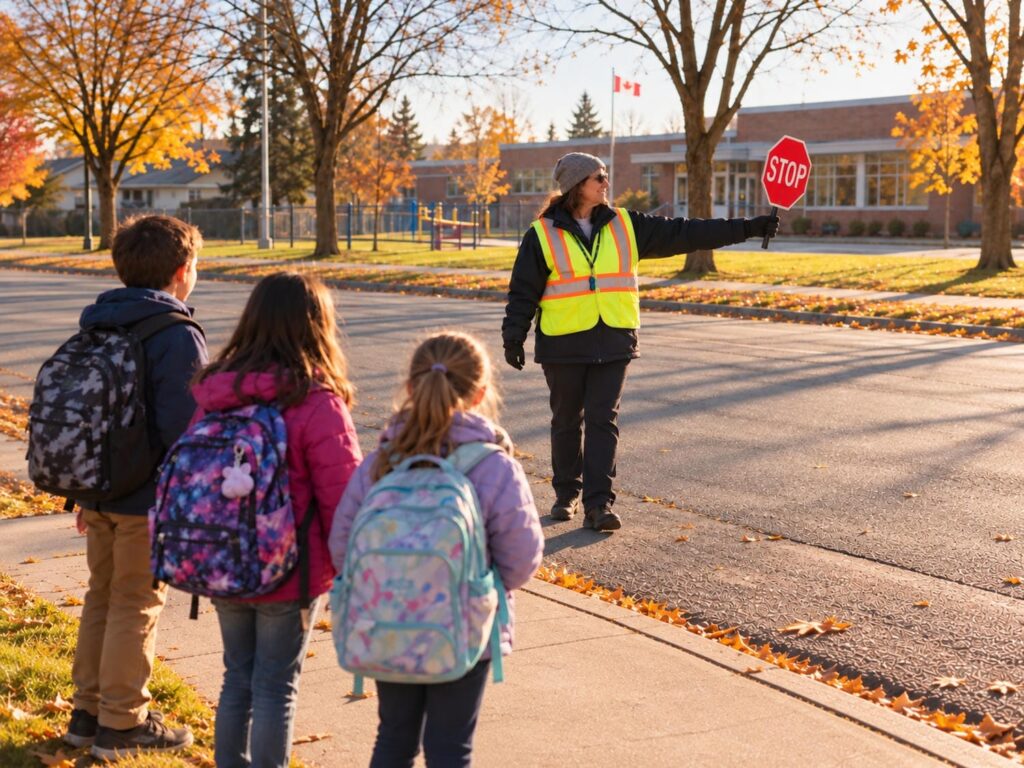
When the injured pedestrian is a child, two of these answers change. The deadline works differently, and the argument an insurer runs is different too. A parent reading this has a particular fear, which is that something has already been missed.
The Two-Year Clock Works Differently for Minors
The basic limitation period does not run during any time in which the person with the claim is a minor and is not represented by a litigation guardian in relation to the claim. In plain terms, the 2 year clock a parent is panicking about is generally not running against a child who has no litigation guardian appointed. That is genuine relief, and it is not a reason to wait. The benefits clocks are still measured in days. Nothing about being a minor makes a dashcam file last longer or a skid mark stay on the asphalt. And the dates are still worth having checked, because which clock applies depends on more than the child’s age.
What Gets Argued When the Pedestrian Is a Child
What an insurer raises in a child’s case is predictable. Whether the child was supervised. What the child did in the seconds before impact. Whether a driver could have seen them at all. The evidence that answers those questions is specific to a child: the sightline from a driver’s seat down to the height of a small child, what the vehicle’s speed allowed for on a street beside a school or a park, and whether the driver was scanning the sidewalk rather than only the road. The duties already set out are where that argument lands.
If the Pedestrian Did Not Survive
If the pedestrian did not survive, the claim does not end with the person. Two questions follow, and they have different answers: who can bring it, and by when. Both are worth asking early, because one of them has a clock on it.
Who Brings the Claim, and the Clock That Applies
The executor or administrator of the estate may maintain an action for injuries to the deceased, in the same manner and with the same rights and remedies the deceased would have had, and damages recovered form part of the estate. That action has its own limit inside it: damages are not allowed for the death itself or for the loss of the expectation of life, so it is not a claim that puts a value on the death. An action under that provision has to be brought within 2 years from the death. Have the dates checked rather than counting the months yourself.
Close family members may also have claims of their own, which is one of the first things to ask about, because who can claim and what each claim covers are different questions with different answers.
Death and Funeral Benefits After 1 July 2026
Death and funeral benefits sit among the benefits that became optional on policies entered into or renewed on or after 1 July 2026, and those optional benefits reach only the named insured, their spouse, their dependants and the drivers listed on the policy. So whether that support is available at all turns on whose policy is in play. That is worth asking about early rather than assuming, and it is a different question from the estate’s claim, which does not depend on anybody’s policy.
When the Driver Had No Insurance, or Was Never Identified
A driver who fled is unidentified, which is not the same thing as uninsured, and the two situations take different routes. Neither one, on its own, means there is nobody to claim against. One route runs through the Motor Vehicle Accident Claims Fund. The other can run through an auto policy, and both have steps that start counting immediately.
If the Driver Had No Insurance
Where no automobile insurance exists to respond to the claim, an injured person may be eligible for compensation from the Fund. It is the last resort for compensation when no other insurance is available. The stated conditions include living in Ontario and having been involved in a motor vehicle accident in Ontario where no one had auto insurance. That last condition is the one to read carefully, because it describes a genuinely uninsured collision rather than a hit and run.
A person with recourse against the Fund for accident benefits may apply to it. So this route can reach treatment and income support, not only a claim for damages.
If the Driver Was Never Identified
Where a person is injured in Ontario by a motor vehicle but the vehicle, the driver and the owner cannot be identified, someone who would have had a claim against that driver or owner can bring an action against the Director. That is an action rather than an application, so it sits on the lawsuit side of the split. A judgment against the Director requires showing that all reasonable efforts were made to find out who the driver and owner were. That is a concrete reason to report the collision promptly and to preserve the footage, the nearby CCTV, the paint and glass left on the road and anything a witness wrote down, before it is gone.
An action against the Director has to be started within 2 years of the day the claim was discovered, and the law presumes that is the day of the collision unless the contrary is shown. Dates like that are worth having checked rather than worked out alone.
There may also be coverage under an auto policy you are insured under, and that route has its own short steps: the collision reported to police within 24 hours, and a written statement and written notice of the claim inside 30 days. Those are days, not years, which is why this is a same-week question.
The $200,000 Limit on What the Fund Pays in Damages
Two different things can come out of a claim like this. Treatment and income support are paid by an insurer as benefits. Damages are the money paid for the harm itself: the income you lost, the care you need, and the effect of the injury on your life.
Where the driver had no insurance, the Fund pays damages up to a total of $200,000, exclusive of costs, for any one uninsured vehicle in any one accident, and a claim that runs through the Fund for an unidentified driver is subject to the same limit. That ceiling sits on the damages side of the claim, and treatment and income support are handled separately.
For a catastrophic injury that ceiling can be reached, which is why whether any other coverage exists is one of the first things to look for. Another driver, another vehicle, another policy somebody is named on: those are the avenues that get checked when the ceiling is in sight.
Talk to Someone Before the Fault Story Sets
In a pedestrian file the fault story gets written early, out of the account the driver gave, and the evidence that would test that account does not wait. The time to put the other side of it on the record is while that evidence still exists. At HSK Law we handle pedestrian injury claims on a No Win, No Fee basis, so having someone look at what happened costs nothing up front, and the first conversation is a free, no-obligation consultation.
You deal with the lawyer handling your file, which matters when you are still in treatment and cannot chase anybody. If you were struck by a car, or you are making the calls for someone who was, book a free consultation and we will tell you what the next step looks like.
Frequently Asked Questions
No. A charging decision and a fault decision are two different exercises, done by different people, on different material. Police decide whether to proceed with an offence. A civil claim asks who is legally liable and in what share, and it is the court that determines each side’s degree of fault. The absence of a charge is evidence an insurer will raise, and it is not an answer. The burden on the driver’s side does not depend on a charge being laid, so it is in place whether or not an officer wrote a ticket that night.
Yes, and the ticket and the claim are separate things. A pedestrian who disobeys a red signal commits an offence with a $35 set fine. That conduct can become part of your share of the blame in the civil claim, and a share reduces what you recover rather than ending the claim. Separately, accident benefits are paid regardless of who caused the collision, so treatment and income support do not wait on the fault argument. What the share works out to is for the court, on the evidence.
Paying registered a conviction, and it did so without anyone examining how the collision happened. Expect the driver’s insurer to raise it. What it is worth is evidence, not the fault decision, because each side’s degree of fault is still determined by the court on the whole of the material. A conviction on a $35 pedestrian offence does not tell a court how fast the vehicle was going, what the sightline was, or whether the driver was watching the road. Those are the questions the apportionment turns on, and they are still open.
You do not need your own policy. Being struck by an insured vehicle is itself what brings you inside that vehicle’s benefits coverage, so the lack of a policy in your name does not put you outside the system. Once a completed application is in, the first insurer to receive it has to start paying while any dispute between insurers about responsibility is resolved. Where nobody involved was insured, the Motor Vehicle Accident Claims Fund is the route to ask about. Which of those applies is worth establishing early, because the application clocks run in days.
No. That sentence is an account of a visibility and speed decision the driver made, and it is the starting point of the argument rather than its conclusion. The driver’s side carries the burden of showing the collision did not come from their own negligence, so the explaining starts on that side. And the account is testable against things that have no interest in the outcome: sightlines at the spot, the lighting, the point of impact on the vehicle, braking and skid evidence. A sightline can be measured.
A crosswalk does not have to be painted to be one. Where the sidewalks on opposite sides of a road line up into a continuous path, the crossing between them counts, so a corner with no painted lines is not automatically crossing outside the rules. Crossing mid-block is where the argument about your own share gets made, and even there a driver’s duty to respond to pedestrians does not switch off between intersections. What comes out the other end is a proportion determined by the court, not a yes or no on whether you can claim.
Keep the two insurers apart in your mind, because the duties are not the same. On your own benefits claim, once you have given notice the forms come from the insurer you are claiming from, and once that insurer asks you for information you have 10 business days to provide it. A call from the other driver’s insurer is a different thing. It is worth getting advice before giving a recorded account of how the collision happened, particularly while you are still being treated for a head injury.
Book a FREE consultation
Submit the form below or call (416) 238-7105 to find out if you have a claim!
"*" indicates required fields